
IVF in Dubai: Cost, Success Rates, Legal Rules, and Best Fertility Clinics
Dubai has emerged very rapidly as one of the leading destinations for latest fertility treatments in the Middle East, for the couples from around the world looking for quality reproductive care. With world-class healthcare infrastructure, highly-skilled and internationally trained fertility specialists, and access to latest technologies like ICSI, embryo freezing and Next-Generation Sequencing (NGS), the city itself has become a popular destination for fertility care.
The cases of infertility have also raised the need for quality treatments for assisted reproductive technologies globally. There are various factors that contribute to the failure of natural conception. The factors such as delayed parenthood, lifestyle changes, stress, hormonal disorders, and male infertility have contributed to rising fertility challenges among couples. However, many patients now look beyond their native countries for advanced, reliable, and confidential fertility treatment options, and Dubai has made itself as a prominent fertility hub in the region.
One of the key factors for the popularity of IVF in Dubai is how they have created a combination of modern medical standards and strict healthcare regulations. Fertility centres in Dubai often provide treatment plans made around a proper diagnosis of the patient, multilingual patient support, and treatments which utilizes advanced laboratory facilities that increase treatment efficiency and overall experience of the patient. In the recent years, multiple technologies has come which has made the whole procedure a lot easier, technologies such as genetic embryo screening and minimally invasive fertility procedures have further enhanced IVF success rates across the city.
What Is IVF?
In Vitro Fertilisation (IVF) is one of the most used treatments which comes under assisted reproductive technologies for treating infertility. This procedure includes multiple stages with eggs collected from the ovaries and fertilised with sperm in a high-tech laboratory. Once the fertilisation begins and embryos develop, if one or more healthy embryos are used by transferring to the uterus to achieve pregnancy.
IVF is mostly suggested for couples experiencing multiple conditions like blocked fallopian tubes, male infertility, ovulation disorders, endometriosis, unexplained infertility, or if at an advanced age.
Latest IVF treatment these days includes latest techniques such as Intracytoplasmic Sperm Injection (ICSI), embryo freezing, donor programs, and genetic testing methods like Preimplantation Genetic Testing (PGT) or Next-Generation Sequencing (NGS). Latest technologies help in improving the embryo selection and might raise the chances of successful implantation and healthy pregnancy results.
Why Dubai Is Becoming a Fertility Hub
- Advanced Fertility Technologies
This city advocates modern reproductive treatment such as ICSI, NGS, embryo freezing, laser-assisted hatching, fertility preservation procedures. - Internationally Trained Specialists
There are fertility specialists and embryologists Dubai have an international qualifications and multiple years of experience advanced IVF treatments. - World-Class Healthcare Infrastructure
The city is known for its high quality services and modern hospitals, advanced embryology laboratories and internationally accredited fertility clinics. - Growing Medical Tourism Industry
This city helps by attracting international patients due to its global connectivity luxury healthcare facilities, high medical standards. - High IVF Success Rates
There are latest lab technologies and personalised treatment plans contributes competitive IVF success rates in Dubai. - Strict Healthcare Regulations
There are healthcare regulations that help in ensuring safety and patient’s care. Since these procedure helps in creating a environment which is safe for patients. - Multilingual Patient Support
Many clinics provide multilingual coordinators as there is a great demand of coordinators who speak english for communicating since a language barrier creates a lot of stress among patients and personalised assistance international patients different countries. - Availability of Advanced Genetic Testing
For an improved chances of selection, fertility centres in Dubai provide genetic technologies such as PGT and NGS. - Privacy and Confidentiality
Dubai is mostly preferred by many couples because the the privacy of the patients are specially maintained without making any comprises in regard to patient’s privacy. The confidentiality is maintained all through the procedure. - Comprehensive Fertility Services
Clinics often provide complete fertility solutions including IVF, ICSI, egg freezing, sperm freezing, donor programs, fertility preservation.
IVF Success Rates in Dubai by Age Group
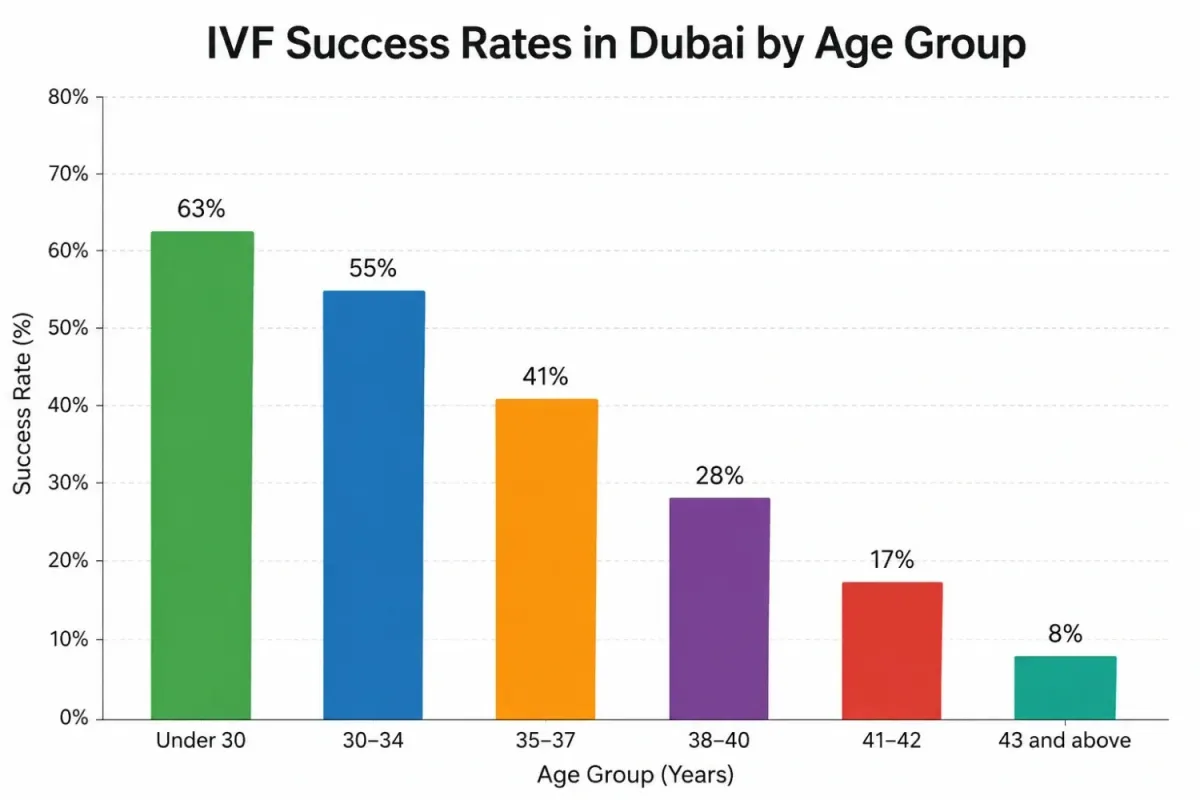
| Age Group | Average IVF Success Rate in Dubai | With Advanced Technologies (ICSI/NGS) |
|---|---|---|
| Under 30 Years | 60% – 95% | 70% – 80% |
| 30–34 Years | 60% – 80% | 65% – 75% |
| 35–37 Years | 50% – 75% | 55% – 70% |
| 38–40 Years | 40% – 55% | 45% – 60% |
| Above 40 Years | 20% – 40% | 25% – 45% |
IVF Success Rates in Dubai Based on Treatment Type
| IVF Treatment Type | Estimated Success Rate | Key Factors Influencing Success |
|---|---|---|
| Standard IVF | 45% – 60% | There are multiple factors that influence success of this treatment and they are age, egg quality, sperm health, embryo quality. |
| IVF with ICSI | 50% – 75% | It is commonly used for male infertility cases |
| IVF with NGS/PGT | 60% – 75% | Improved embryo selection via the genetic screening |
| Frozen Embryo Transfer (FET) | 50% – 70% | Depends on how is the uterine preparation and how is embryo quality |
| Donor Egg IVF | 65% – 95% | There is still a higher success due to younger donor eggs |
| IVF for Women Above 40 | 20% – 40% | The egg quality and ovarian reserve is reduced. |
| IVF for PCOS Patients | 55% – 70% | Treatment depends on hormonal balance and treatment response |
| IVF After Previous Failure | 35% – 55% | If any fertility condition or treatment strategy |
Who Should Consider IVF?
IVF may be recommended for couples who even after multiple cycles and treatments have been unable conceive naturally despite trying a long period. Women having blocked fallopian tubes, ovulation disorders, low ovarian reserve, or endometriosis benefit from IVF treatment. It also commonly advised couples experiencing male infertility issues such as low sperm count or poor sperm motility.
There are treatments such as IVF that can help individuals or couples with repeated miscarriages, unexplained infertility, genetic disorders, or if there are previous cycles which is failed multiple times. Women who willing to secure and preserve fertility due delayed parenthood medical conditions may consider IVF and embryo freezing options available in Dubai. Those seeking affordable fertility treatment can also explore options across different countries.
IVF Procedure in Dubai
Initial Consultation and Fertility Evaluation
The IVF journey Dubai usually begins with initial consultation with fertility specialist. During this stage, the doctor reviews couple’s medical history lifestyle factors previous pregnancies and any prior fertility treatments. The consultation helps in identifying possible causes of infertility and allows the specialist create personalised treatment plan.
Fertility evaluation generally includes blood tests, hormonal analysis, ultrasound scans, semen analysis, and ovarian reserve testing. There are some clinics which may also recommend genetic screening or additional diagnostic procedures highly relying on the patient’s condition. These tests help in determining the most appropriate IVF protocol and improves treatment planning.
Many fertility treatment clinics in Dubai also offer doctors’ counselling to give an explanation about the treatment process, estimated costs, expected success rates, possible risks involved during IVF treatment.
Ovarian Stimulation
Once after the initial assessment, the woman is suppose to undergo ovarian stimulation advocating fertility medications. An important purpose of this stage is to help in encourage the ovaries to result in producing multiple mature eggs rather than a single egg released while a natural menstrual cycle.
Then the hormonal injections are mostly supposed to get administered which is done for around 8–14 days under a close medical supervision. At the time of this period, doctors helps by monitoring follicle development through the ultrasound scans and then the blood tests are undertaken. Monitoring is important to adjust the medication dosage and help decreasing the risk or any complications such as Ovarian Hyperstimulation Syndrome (OHSS).
If the follicles reach the required size, a trigger injection is applied to help eggs mature before retrieval.
Egg Retrieval Procedure
Egg retrieval a minor surgical procedure undertaken approximately 34–36 hours just after the trigger injection. The procedure usually is carried out under mild sedation or anaesthesia ensuring patient comfort.
Using ultrasound guidance, the fertility specialist inserts thin needle through the vaginal wall collect mature eggs from ovarian follicles. The procedure generally takes 20–30 minutes, and most patients easily return home the same day without any hassle.
The eggs extracted are then helped in transfer to the embryology laboratory, where they are then examined and prepared for the process of fertilisation.
Sperm Collection and Fertilisation
On the very same day of egg retrieval, a semen sample then collected from the male partner or the sperm donor. The sperm sample which was taken for testing is then processed in the laboratory to keep aside the healthiest and most active sperm cells.
Fertilisation may occur through the process of conventional IVF or Intracytoplasmic Sperm Injection (ICSI). In conventional IVF, eggs and sperm are combined in laboratory dish for natural fertilisation. In ICSI single healthy sperm is directly injected into the egg, which is especially useful in cases of male infertility.
After fertilisation, the embryos carefully monitored specialised incubators under controlled laboratory conditions.
Embryo Culture and Development
The fertilised eggs develop embryos over next few days. Fertility specialists monitor embryo growth, cell division, overall quality during stage. Most clinics Dubai culture embryos for five six days until they reach blastocyst stage.
Blastocyst-stage embryos mostly chosen because they then help in providing better implantation potential and an improved embryo selection. Latest technology in fertility centres may also advocate the technologies like time-lapse embryo monitoring and AI-supported embryo assessment, improves treatment outcomes.
Some patients may help additionally in choosing genetic testing procedures like Preimplantation Genetic Testing (PGT) or Next-Generation Sequencing (NGS) which help in identifying chromosomally healthy embryos before transferring in the uterus.
Embryo Transfer
Embryo transfer one the final and most important stages the IVF process. During procedure, one or more healthy embryos placed into the uterus using thin catheter. The procedure is then generally painless and does not require anaesthesia.
The number embryos transferred depends on various factors like patient’s age, embryo quality, fertility history, and clinic guidelines. There are clinics that will help in preferring single embryo to transfer to help in reducing the risk of having multiple pregnancies.
Following transfer, patients are mostly advised rest briefly before returning normal daily activities. Hormonal medications might help in continuing to support implantation and early pregnancy development.
Pregnancy Testing and Follow-Up
It takes approximately 10–14 days after embryo transfer blood test is carried out to achieving successful result. If the result is positive, there are adds-on scans and hormonal monitoring scheduled assess embryo implantation and pregnancy progression.
In cases where there are any extra healthy embryos are available, they may be frozen for the future use through cryopreservation. Frozen embryos can later be used in Frozen Embryo Transfer (FET) cycles without repeating the entire IVF process.
Dubai fertility clinics mostly help providing continuous a follow-up care, counselling support, and treatment that is prescribed on the basis of the diagnosis of the patient monitoring throughout the IVF journey which helps in improving patient comfort and the treatment success.
Legal Rules and Regulations for IVF in Dubai

IVF Laws in Dubai
IVF in Dubai helps by regulated under UAE reproductive healthcare laws which gives provides the rules and criteria for how the treatment can be performed, it has to be at a licensed fertility centres. The clinics are supposed to follow a highly strict guidelines that labs there must follow which is regarding embryo handling, storage, and patient consent.
Traditionally IVF treatment is been allowed mostly for couples who are legally married and then they can start using their own eggs and sperm. Most clinics need an official documentation, including valid marriage certificate, before starting treatment.
Donor Egg and Surrogacy Policies
The use of donor eggs, donor sperm, and donor embryos is highly banned in Dubai due to legal and religious regulations. Many clinics only offer IVF using the couple’s own eggs and sperms material.
Surrogacy is also heavily regulated and generally not widely permitted under standard UAE fertility laws. Patients considering such options should consult fertility clinics and legal experts for updated regulations.
Eligibility for International Patients
In Dubai, IVF treatment is widely used and it remains a popular destination for international patients because of its advanced medical facilities and modern IVF technologies. Many clinics provide multilingual support and personalised treatment services for international couples.
International patients are usually required to submit passports, medical records, and legally valid marriage certificates before beginning IVF in Dubai.
Dubai vs India IVF Cost
| Treatment Component | Dubai (AED) | India (INR) |
|---|---|---|
| Basic IVF Cycle | AED 25,000 – 45,000 | ₹1,20,000 – ₹2,50,000 |
| IVF with ICSI | AED 30,000 – 50,000 | ₹1,80,000 – ₹3,00,000 |
| NGS/PGT Genetic Testing | AED 10,000 – 20,000 | ₹60,000 – ₹1,50,000 |
| Embryo Freezing | AED 5,000 – 10,000 | ₹20,000 – ₹50,000 |
| Frozen Embryo Transfer (FET) | AED 8,000 – 15,000 | ₹30,000 – ₹60,000 |
| Donor Egg IVF | AED 40,000 – 70,000 | ₹3,00,000 – ₹5,50,000 |
Key Comparison Points
- IVF treatment generally more expensive than India due to higher healthcare infrastructure and operational costs. For a detailed breakdown, check IVF Cost in Dubai.
- Dubai provides internationally accredited fertility centres and advanced reproductive technologies.
- India remains and preferred destination comparatively affordable IVF treatment in India and medical tourism.
- Both countries provides an advanced procedures such as ICSI, embryo freezing, and genetic testing.
IVF Success Rates by Country
| Country | Average IVF Success Rate | Key Highlights |
|---|---|---|
| UAE (Dubai) | 50% – 70% | Latest fertility technology and clinics complying with international standards |
| India | 45% – 65% | Cost-effective treatment and rapidly growing fertility sector |
| USA | 55% – 75% | Highly advanced and latest reproductive medicine and genetic testing |
| Spain | 50% – 70% | Remains a quite popular fertility tourism destination in Europe |
| Turkey | 45% – 65% | Competitive treatment costs and experienced specialists |
| Thailand | 45% – 68% | Preferred destination among international IVF patients |
| Greece | 50% – 70% | Fertility tourism and donor programs |
IVF success rates varies on the basis on age, embryo quality, fertility condition, clinic expertise, and use advanced technologies such as NGS or PGT.
Best Areas in Dubai for Fertility Treatment
| Area in Dubai | Why It Is Popular for IVF Treatment |
|---|---|
| Dubai Healthcare City | Global hub for internationally accredited fertility clinics & specialised centres |
| Jumeirah | Known for its premium healthcare facilities and top luxury medical services |
| Al Barsha | Provides access to several modern fertility clinics and hospitals |
| Business Bay | Quite popular among international patients because of its central location and latest healthcare infrastructure |
| Dubai Marina | Home to high-end healthcare facilities with multilingual patient support |
| Deira | Provides comparatively affordable healthcare and fertility consultation options as well |
Why Patients Prefer Dubai for IVF
- Latest and modern fertility technologies & advanced embryology laboratories
- Experienced and internationally trained fertility specialists
- There is a better medical tourism infrastructure and global connectivity
- Multilingual support for international patients
- High standards of privacy, comfort, and patient care
- There are advanced procedures available like ICSI, NGS, and embryo freezing
Benefits and Challenges of IVF in Dubai
Benefits of IVF in Dubai
- Advanced Fertility Technology
Dubai fertility clinics provide modern procedures like ICSI, embryo freezing, PGT, NGS, and laser-assisted hatching in improving the treatment outcomes. - Internationally Trained Specialists
Many fertility doctors and embryologists there have a global qualifications and many years of experience in advanced reproductive medicine. - High IVF Success Rates
The use of advanced lab technology and personalised treatment plans contributes to a high IVF success rates. - Modern Healthcare Infrastructure
This city is known for globally recognized hospitals, advanced embryology labs, and internationally accredited fertility clinics. - Strong Medical Tourism Facilities
Patients all over the world benefit from multilingual support, travel assistance, and personalised fertility care services. - Patient Privacy and Comfort
Multiple clinics follow multiple standards of confidentiality, comfort, and personalised patient care during treatment.
Challenges of IVF in Dubai
- The treatment costs remain quite high
IVF in Dubai can be quite costly, specially when there additional procedures are paired with the IVF treatment such as ICSI, NGS, or embryo freezing if required. - Strict Legal Regulations
Laws for the fertility treatments consist of restrictions donor programs, surrogacy, and reproductive procedures. - Emotional Stress
IVF treatment can be complex due to multi-stage treatment, repeated medical visits, and treatment pressure. - Additional Medical Expenses
Medication charges, laboratory procedures, and follow-up treatments can raise overall costs. - Travel and Accommodation Costs
Patients from abroad might get to face an extra expenses related to flights, stay, and extended stays during treatment. - Variable Success Rates
IVF success highly depends on different factors like age, fertility condition, embryo quality, and overall health, which can differ from patient to patient.
Tips and Expert Advice for IVF in Dubai
How to Choose the Right Fertility Clinic
- Checking for the clinic’s licensed status and if it follows UAE healthcare regulations also important.
- Research clinic’s IVF success rates, laboratory facilities, and patient reviews.
- Fertility specialists who are experienced in procedures like ICSI, NGS, and embryo freezing.
- Clinics that provide treatment planned around your schedule and transparent pricing. So that it makes the process convenient for international patients.
Questions to Ask Before Starting IVF
- What are the estimated success rates for my age and fertility condition?
- What is included in the total IVF treatment cost?
- Will additional procedures such as ICSI or genetic testing be required?
- How many embryos will be transferred during treatment?
- What are the possible risks or side effects of the procedure?
Ways to Reduce IVF Costs
- Compare treatment packages provided by different fertility clinics.
- Ask for detailed cost breakdowns prior to the beginning of treatment.
- Consider clinics that provide bundled IVF packages or financing options.
- Avoid unnecessary add-on procedures unless medically prescribed.
- Plan travel and accommodation expenses in advance if travelling internationally for treatment.
Common Myths About IVF Treatment
- The more popular the treatment, the more myths are around it. A myth around IVF which is the most common, is that this treatment guarantees results and there is no chance of failure of this treatment.
- But if studied with a deeper lens and research done around it, one may get to know that IVF success rates depend on different factors such as age, embryo quality, overall reproductive health, and underlying fertility conditions.
- Misconception that too has gained a little popularity and is widely believed is that IVF always results in multiple pregnancies.
- Many people also trust that IVF is only suitable for women with fertility problems, but there are male infertility also contributes significantly to many IVF cases as well.
- Another common myth is that IVF pregnancies are nothing but an unnatural or unsafe phenomenon. In fact, IVF-conceived babies are generally as healthy as naturally conceived babies, and advancements in reproductive technology have made the procedure safer and more effective over the years.
IVF for Single Parents and International Couples
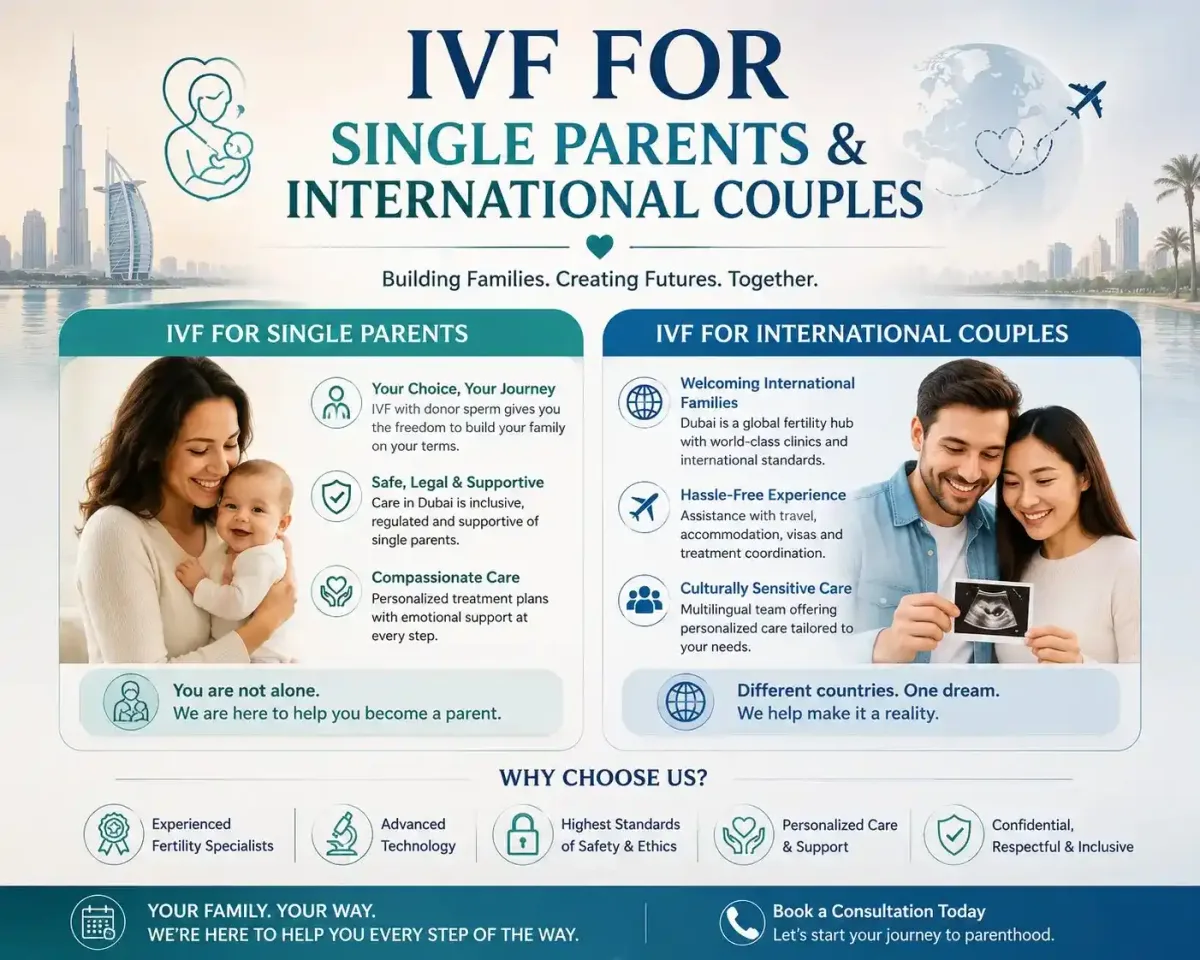
For both single parents and international couples, IVF treatments are now allowed, though for other fertility treatments available in Dubai, couples are still required to be legally married to undergo all the other treatments.
However, IVF eligibility in Dubai is influenced by local reproductive laws and regulations. International couples are usually required to provide valid passports, medical records, and legal marriage certificates before beginning treatment. Regulations regarding donor programs and surrogacy might also provide from those in other countries, making it important for patients to understand the legal requirements before starting their fertility journey in Dubai.
Importance of Embryology Labs in IVF Success
The embryology labs are well-equipped with all the latest equipment that are used for the IVF treatment and helps in getting successful treatments. The lack of proper equipment and systems results in the failure of not only IVF but in most treatments, that remains a common phenomena and for that reason keeping up with the latest technology and having well-equipped laboratories remains important. The Advanced laboratories for IVF should use specialised incubators, air filtration systems, temperature control, and monitoring technologies to maintain ideal conditions for embryo growth.
Nowadays, success rates of IVF have seen a significant increase which was made possible only by the emerging techniques like modern labs and experienced workforce “the embryologists”. Practices like ICSI ,embryo freezing, blastocyst culture, and genetic testing which needs professionals who are proficient and ultra-modern equipment for precise and unerring end reports .Clinics that provide the bliss of being fertile must be positioned to provide healthier embryo selection and improved treatment outcomes for patients undergoing IVF which will be only possible if well-supplied embryology labs are present.
Choosing Between Fresh and Frozen Embryo Transfer
Fresh embryo transfer is medical procedure where the embryos are placed into the uterus within the same IVF cycle after the step of fertilisation, while frozen embryo transfer (FET) uses embryos that have been previously kept as frozen and stored. Fresh transfers shorten the treatment timeline, but fresh embryos are not considered to be always suitable for every patient, especially when hormonal levels are high or additional genetic testing required.
Frozen embryo transfer has become increasingly popular because it allows the body with the time to recover prior the implantation. FET may also increase uterine preparation and provides flexibility for treatments and procedure to be done like NGS or PGT genetic testing. The choice between fresh and frozen embryo transfer depends factors like age, embryo quality, medical condition, hormonal response, and the fertility specialist’s suggestion.
Hormonal Testing Before IVF
Hormonal testing is an major part of the IVF evaluation process because helps fertility specialists assess reproductive health and identify potential fertility issues before treatments start. Blood tests commonly performed for diagnosis of hormones like FSH, LH, AMH, estrogen, progesterone, and thyroid hormones, provide information about ovarian reserve, ovulation, and overall hormonal balance for checking if in right levels.
These test results help doctors create personalised IVF treatment plans and determine the appropriate medication dosage during ovarian stimulation. Hormonal testing also identify conditions such as PCOS, thyroid disorders, or diminished ovarian reserve may affect IVF success rates. Accurate hormonal assessment improves treatment planning and helps increase the chances successful fertilisation and pregnancy outcomes.
Impact of Age on Female Fertility and IVF Outcomes
Age remains a major factor which should be given careful thought and taken into consideration when discussing the success of the treatment. Women are born with limited number of eggs, and both egg quantity and quality gradually decline with the age. Fertility typically starts to decrease after the age of 30 and declines rapidly after 35, making conception difficult and increasing the risk of chromosomal abnormalities.
What remains the ideal age for the success of IVF treatment in women? This is what is has become common concern of the most patients. And the answer to that is the younger the age, higher are the chances of success and the older the age the lower are the chances of success. the Latest fertility technologies like ICSI, embryo freezing, and genetic testing like NGS may help improve embryo selection and IVF results for older patients.
How to Prepare Financially for IVF Treatment
IVF treatment can be financially demanding, especially when additional procedures like there a number of treatments ICSI, genetic testing, embryo freezing, donor programs are required. Before starting treatment, couples should request detailed cost breakdown the fertility clinic, including consultation fees, medications, lab charges, embryo transfer, and follow-up procedures. Understanding complete treatment cost in advance helps avoid unexpected financial stress during the IVF journey.
Comparing treatment packages that are propesed to offer by clinics and exploring financing options if present such as medical loans, or insurance coverage. International patie ts are advised to plan the travelling, arrangement for accommodation, visa expenses, and stays extended during the treatment. A savings plan is also helpful
Male Infertility Treatments Available in Dubai
- ICSI is mostly used for male infertility and includes the procedure injecting only a single healthy sperm directly into the egg to raise the chances of fertilisation.
- Fertility clinics in Dubai provides sperm analysis helps in evaluating sperm count, motility, morphology, and overall sperm health.
- Hormonal medications may be prescribed for treating conditions which affects sperm production and male reproductive health.
- There are multiple techniques such as TESA, PESA, and Micro-TESE which helps in retrieving sperm directly from the testes in cases if there is a severe male infertility.
- Varicocele repair surgery may improve sperm quality and fertility outcomes in some men.
- Procedures such IMSI, PICSI, and MACS are used to select healthier sperm for IVF and ICSI treatments.
- Dubai clinics offer sperm cryopreservation men undergoing medical treatments or planning future fertility.
- Specialists may recommend dietary changes, stress management, exercise, and smoking cessation improve sperm quality.
- Genetic screening may help identify inherited conditions contributing infertility or poor sperm production.
- Some international fertility consultations may discuss donor options depending legal regulations and patient eligibility.
Conclusion
Dubai has become a prominent destination for the IVF treatment because of its advanced fertility technologies, experienced specialists, and modern healthcare infrastructure. IVF in Dubai is cost-effective and feasible option for patients travelling from abroad. In spite of legal regulations and higher costs, the city continues attract international patients seeking high-quality fertility care and improved reproductive treatment outcomes.


Request Call Back
Fill you contact number & get free call from our fertility expert.
+91 989 929 3903