

Male Infertility Treatment
Affordable Male Infertility Treatment In India: Top Doctors & Hospitals What is infertility? Infertility is the failure to achieve pregnancy after regular unprotected sex (without the use of any contraception) for at least a year. It is ‘Primary’ infertility means failure to get first pregnancy, later if ‘secondary’ infertility means one fails to achieve a subsequent pregnancy. Primary infertility is an extremely common problem, affecting more than one in seven (15 per cent) couples attempting their first pregnancy. Among those experiencing difficulty with conception, a male fertility problem is considered important in around 40 per cent of couples. In 15 per cent of couples it will be solely a male fertility problem and in around 25 per cent, there will be a problem in both partners. Male infertility is by and large caused by the issues that have an effect on either sperm transport or sperm production. Through male fertility evaluation, the specialist may be able to come across the cause of the problem. Approx two-thirds of infertile males have the issue with sperm production in the testes; also several male fertility cases have been found of low sperm count, less sperm motility or morphologically unfit for fertilization. What Are The Causes Of Infertility In Men? There are several causes of fertility problems in men. They include: Obstructive Problems A blockage in sperm-carrying tubes has many potential causes. The most common are outlined below. Some men have congenital (present at birth) absence of the vas deferens on one or both sides. The vas deferens is the tube that conducts the testicular component of semen to the urethra, which then carries semen through the penis to the outside world. About 10 per cent of men with an obstructive cause for their infertility will have this problem. The seminal vesicles (where other semen components are made) are often absent too. Another rare obstructive cause is Berry-Perkins-Young syndrome, in which sufferers have a chronic chest disease (bronchiectasis), chronic sinusitis and obstructive infertility. Success Rates of Obstructive vs Non-Obstructive Azoospermia in Male Fertility Treatment The success rates of treatment of obstructive and non-obstructive azoospermia in India is relatively high compared to other countries. There are different treatments that help treat male infertility caused by obstructive azoospermia and non-obstructive azoospermia. Male infertility treatment in India is a safe and trusted procedure that helps get you successful results. Treatment Outcome Obstructive Azoospermia (OA) Non-Obstructive Azoospermia (NOA) Sperm Retrieval Success 90–100% 30–60% Micro-TESE Sperm Retrieval Rate Up to 100% 40–50% Fertilization Rate with IVF-ICSI 60–75% 45–60% Clinical Pregnancy Rate per IVF Cycle 35–50% 20–35% Live Birth Rate per IVF-ICSI Cycle 30–45% 15–30% Chance of Natural Pregnancy After Corrective Surgery Moderate to High (depending on blockage repair) Usually very Low Overall Treatment Prognosis Generally Excellent Variable and condition-dependent Top 5 Centres For Male Infertility In India Cost Of Male Infertility Treatment In India Treatment Approximate Cost (USD) Semen analysis $7 – $12 Hormone blood tests $35 – $95 Urology/andrology consultation $12 – $35 Scrotal ultrasound/imaging $25 – $60 Medicines / hormonal therapy $60 – $300 PESA / TESA $300 – $600 TESE $360 – $720 Micro-TESE $1,200 – $2,400 IVF with ICSI (per cycle) $1,800 – $4,200 Testicular Injury And Disease Injury in the testicles, which may occur in sport or during a fight, can cause swelling of the testicles, or bleeding in or around them. This probably causes the blood supply to the testicles to fail, resulting in permanent damage to the sperm production mechanism. Torsion of the testicles (twisting of a testicle on its cord) can have a similar effect if it is not treated very quickly with surgery. Viral infections can cause inflammation of the testicles (orchitis, which usually appears as painful swelling of the testicles) and failure of sperm production. Varicocele A varicocele is a dilation of the testicular veins in the spermatic cord that leads from the testicles to the abdomen. The role of this condition in causing infertility is uncertain and highly controversial. Varicoceles occur in 15-20 per cent of fertile men and 30 to 40 per cent of men with fertility problems. They can occur on either or both sides, but are far more common on the left. They are best identified when the man is standing up and are often described as feeling like ‘a bag of worms’. Experts suggest that the varicocele either heats up the testicles or impairs their blood supply resulting in a build-up of body waste products, thus affecting fertility. The co-existence of other risk factors, such as smoking, with varicocele seems to have a greater effect on the risk of infertility. Sperm Disorders Problems with chromosomes (packages of genetic material) occur in about 2 to 20 per cent of infertile men and can affect their fertility in two ways: Problems With Erection And Ejaculation Problems with sex are the principal cause of infertility in about 5% of couples. This can be due to: Hormonal Problems Testosterone deficiency can reduce fertility and may be caused by problems with testicular testosterone production, or problems with the pituitary gland or hypothalamus in the brain, which control testosterone production. Overproduction of prolactin (hyperprolactinaemia), a hormone produced by the pituitary gland, may also reduce fertility. General Medical Disorders That Reduce Fertility There are several conditions that may reduce fertility: Medical Condition How It May Affect Male Fertility Fever (flu, pneumonia, severe cold) These high feves can affect by reducing the sperm production and can also affect the quality of the sperm. Once recovered from these conditions the sperm production usually improves Diabetes Chronic illness may result in damage the autonomic nervous system, responsibl for regulating functions such as heart rate and respiratory rate, which can lead to erectile dysfunction. High blood pressure Hypertension may contribute to erectile dysfunction, either directly or as a side effect of medication. Coronary artery disease A decreased blood flow hardening of arteries, medication used for heart may affect the erection function in men. Neurological disorders Conditions such as multiple sclerosis, stroke, or spinal cord

IVF Treatment in India – Cost, Procedure, Success Rate & Best Clinics
IVF Treatment in India is the only way many childless couples can achieve pregnancy. IVF is one of the best ART methods that helps couples begin the most beautiful journey of becoming parents. However, many people are still unable to achieve a healthy pregnancy naturally. Couples who cannot conceive even after trying regularly often find that IVF treatment is the best and last option left for them. IVF treatment is the best way to have your own child. IVF is also known as test-tube baby treatment; this treatment is the most preferred ART technique for the pregnancy. However there are some couples, who are unaware or lack of the information about this treatment, many of the individuals have many doubts and myths in the mind just before he treatment of IVF because is it the first ART, production that is turn in the immersive direction by the medical science. As we all know that the treatment works in a different way so the procedure and what to do it and what not to during it play an important role during the procedure. Even what is the reason to have the infertility problem and who is responsible for it? male or female partner so in that case the patient can easily get the root of it which may be helpful for the fertility expert and to resolve and get the reasonable way to treat it. Now look at the steps and the treatment that the patient has to face or the question that will come in the mind of the patient before the treatment. It is possible to have the unsuccessful IVF treatment may be the not performed in the right direction so for it the patient should focus on the process of the IVF. What to do when you plan for an IVF treatment in India? Fertility investigation: Join a support Group: Eat energetically Food: Fertility Investigation – Yes, before the treatment of IVF it is the only thing that decided that what is the exactly problem with the patient by which they are not able to conceive the child and, on the other hand, the decision what kind of treatment the patient need according to the condition and the problem of infertility is how long and either it is genetic of medical basically the treatment will take place after investing all theses angles. This refers to the situation when the patient needs emotional support because in most of the situation when the relative and the friend circle get to know that you can’t conceive the child due to the medical reason so they make fun of it or basically didn’t support you at the time when you need support so the best way to decreased the level of your stress so for it join a support group IVF that provide you the positively that you need at the time of IVF procedure. Have a Healthy diet – For the successful IVF program it is very important to have a great and the balanced diet for the IVF. Add vitamin D in your meal because that contains energy and provide the energetic nutrition to the child. Even unbalanced diet may be the cause to have the failed IVF and eat as much as pineapple you can because that provide water to the child. Give yourself at least two days rest post embryo transfer – It is important for the successful implantation because on the basis of it that will decide that either the IVF treatment will be successful or not so give two days rest to your mind and body and read books or do something else that will definitely blow your mind even try to have a day without any stress and spend give the complete time to yourself. Take a chill-pill during the result period – Laughing is the best therapy, but you will glad to know that laughing can easily decrease the level of stress because many people think that the IVF is one of the most painful procedure, but nothing is like that because IVF can be the uncomfortable procedure and that can easily give you the stress so for the successful implantation laugh or stay cool and relax post embryo transfer resting period. What not to do during the IVF procedure? Avoid oily and the junk food: It is very important not for the normal but for the IVF also to avoid oily and the fast food eat as much as cool and the warm food because that provide energy and the activeness to your body. Even the oily and the junk food produce the hormone that can easily affect the success rate of the procedure. Stick to bed rest after embryo transfer: If you are thinking that this type of rest required just after the procedure of the IVF so it is not the right way yes! The patient can take rest but for the 10 minutes but the rest of 2 or 3 days that not requirement even the patient can easily continuous the physical activity that they do on the regular basis. Melatonin can help improve egg quality: No, never prefer any kind of medication during the procedure of IVF even melatonin is the sleeping tablets but now it is not confirmed that this type of medicine can easily develop or implant the egg in the woman. Herbal remedies may help with IVF: There is no data found out in the medical science that herbal or the home remedies even increase the level to conceive the child even if you ever think that with the treatment of IVF you can also add home remedies but this is not the right way to plan family because with herbal remedies can decrease the 30% of chances not to conceive the child. Special diets can boost your chances of getting pregnant: If you are thinking that if a person is taking the treatment of IVF so they need the special diets so nothing likes

Surrogacy cost in Delhi
Surrogacy cost in Delhi is an important concern for couples who want to start a family through surrogacy. Delhi is a popular city for fertility treatments because it has advanced hospitals, skilled doctors, and good medical care. The surrogacy cost in Delhi depends on many factors such as medical tests, IVF procedures, surrogate care, medicines, and legal fees. Some couples may need extra services like donor eggs or sperm, which can increase the total cost. Overall, Delhi offers quality surrogacy treatment at a cost that is more affordable compared to many other countries. Legal framework governing surrogacy in Delhi? surrogacy, the act includes the following: Commercial surgery is banned: only altruistic surrogacy is allowed in India. For intended parents. Should be citizens of india Should be a married heterosexual couple Married for at least 5 years. For Surrogate mothers The surrogate mother’s age should be around 25-35. Must be familiar to the intended parents. She cannot use her own eggs. Should be married with at least 1 biological child. Can act as a surrogate only once in life. Help can be taken from Surrogacy Lawyers in Delhi, so that future differences and legal disputes can be handled properly Eligibility criteria for surrogacy to intended parents— A new surrogacy law in India would make the intended couple meet certain requirements. Marital Status: The couple should be married for at least 5 years. Age limit: the male should be between 26 and 55 years, and the female partner must be between 23 and 50 years. Medical requirements: They must have certain certificates of medical indication and eligibility from a registered medical practitioner. Nationality: Only citizens of India are eligible for surrogacy. Commercial surgery is banned: Only altruistic surrogacy is allowed in India, which means the overall altruistic surrogacy cost mainly includes medical treatment, surrogate care, insurance, and legal approvals rather than commercial fees. What are the requirements for becoming a surrogate mother? The surrogate must meet the following criteria: Altruistic Intent: The surrogate must go through surrogacy without any financial gain. Age and marital status: The surrogate must be between 25 and 35 years and also should be married. Parental experience: Should have least 1 biological child Health experience: The surrogate must provide certificates of physical and mental fitness issued by a competent medical authority. Surrogacy Attempt: A woman can become a surrogate only once in a lifetime. Surrogacy cost in Delhi The cost of surrogacy in Delhi depends on several factors and varies from case to case. The overall expenses are primarily related to medical procedures, surrogate care, and insurance coverage required to complete surrogacy in a safe manner. The final cost is influenced by individual medical needs, treatment complexity, and clinic protocols. Tips for managing surrogacy costs: How to manage the cost of surrogacy in Delhi- Comprehensive planning: Outline all potential expenses early in the process to avoid unexpected costs. Choose the right clinic: Select the right clinic that offers everything which is needed Legal consultation: Help can be taken from legal experts so that future differences can be handled properly. Financial Assistance: Watch out for options medical loans or flexible payment plans offered by clinics. Factors affecting the surrogacy cost in Delhi Medical Costs: A large percentage of costs are associated with fertility treatments, including IVF and embryo transfer. Monitoring during pregnancy: Cost also depends on compensation the surrogate receives for living and medical costs. Legal cost: The expense is increased by legal and administrative charges associated with agreements, contracts, and parental rights. Clinic reputation: In general, more developed clinics that provide services like medical and legal charge higher prices. Surrogate Health: The total amount could be increased by healthier surrogates that demand more money. Location and Travel: The price might increase because of travelling, staying, and international logistic needs. Detailed Cost Breakdown for Surrogacy in Delhi This table provides a comprehensive overview of all expenses involved in the surrogacy process in Delhi. Item Cost (₹) Notes Donor Eggs 1,50,000 – 2,50,000 Needed if self-eggs are not used Donor Sperms 25,000 – 65,000 Used if sperm quality is poor Extra IVF Cycle 1,50,000 – 2,00,000 If first cycle fails Extra Embryo Transfer 50,000 – 1,00,000 Depends on frozen/fresh embryos Surrogate Compensation 4,00,000 – 8,00,000 More if surrogate is less experienced or has health issues C-Section Delivery 1,50,000 – 2,00,000 Needed for cesarean delivery Twin Delivery 1,00,000 – 2,00,000 Extra cost if surrogate delivers twins Legal Costs 2,00,000 – 3,00,000 For contracts & government compliance Psychological Screening 2,000 – 5,000 Checks intended parents’ readiness Donor Workup 50,000 Tests & screening for donor Embryo Freezing (6 months) 5,000 Preserves embryos for future use Coordination & Management 1,50,000 Surrogacy process management NICU Charges 10,000 Neonatal care after birth Baby DNA Report 20,000 Confirms baby’s genetic link It includes medical, legal, and surrogate-related costs to help intended parents plan their budget effectively. Surrogacy Payment Schedule in Delhi Delhi follows a structured payment schedule for surrogacy services. A patient that covers agency fees, legal costs and administrative costs to make sure all the legal and procedural steps are taken before pregnancy. Payments are made in installments to the surrogate to take care of her living expenses and well being during pregnancy. The payment schedule usually includes includes a sum after the pregnancy is confirmed through medical tests, acknowledging the commitment of the surrogate. The final payment is made after the baby is born to the surrogate and other expenses. What is the Guaranteed Surrogacy Package in Delhi? What is guaranteed surrogacy? A guaranteed surrogacy program gives money back, either the full or partial amount is given back. In this model there are several attempts until a live birth takes place and all other expenses under a single fixed cost. It will eventually reduce financial anxiety and uncertainties from the intended parents, having a set charge and making it easier to handle the surrogacy process. Key Features of Guaranteed Surrogacy: Multiple IVF tries if needed Support if miscarriage happens All medical tests included Goal

Surrogate Mother In Delhi
Hopeful intended parents, single parents or international intended parents still have a chance to fulfill their dream of becoming parents through surrogacy. An appointment needs to be taken to get the a healthy surrogate mothers to carry the biological child at the lowest cost in Pan India. Along with this discussion on the major topic is about surrogate mother in Delhi for intended parents, and international patients who are curious to conceive a baby through a surrogate mother undergo the clinic or family assistance. How much does a surrogate mother cost in Delhi? It is a common question for parents considering this journey, as the costs vary depending on clinic, treatment, and support provided. What is surrogacy? Surrogacy is a method of assisted reproduction technology where intended parents work with gestational surrogate/surrogate mother. She carries and cares fo the baby in her womb until birth and hands over the child to you. Intended parents use surrogacy to start and grow a family when they cannot do it on their own. Select the right surrogate mother from the legally certified centers. Many intended parents also wonder, Is surrogacy allowed in Delhi? The process is legal under Indian surrogacy law, with clear regulations for intended parents and surrogate mothers. What are the conditions when surrogacy is considered? In India, intended couple are allowed to undergo surrogate mother in Delhi when medical conditions rule out of the inability of conception through any other means of reproduction. Uterine conditions Pelvic Systemic: Fertility Process For Surrogate mother in Delhi? The decision to use a surrogate is generally not easily approachable. However, there are certain clinic in India which help in making the journey simple with a strong bond trust. The clinic has surrogate mother database which consists of highly proven fertility, pre-screened, and completely family background with legally vertified consent forms. The surrogate is also ready to go through further screening with the intended parents. Once the appointment is booked, the intended parent is provided with a list of different surrogates for you to pick. When a match has been found between intended parents and a surrogate mother picked by intended parents themselves, all screening is done, such as Blood investigations, Ultrasounds, Screening of complete medical history, Surgical and family history is effectively done. The surrogate is free from health conditions and is fit to recieve the embryo in uterus. Surrogate Mother In Delhi Qualifications She should fit mentally and physically Her age s between 22-33. She should have a proven fertility history. She has one healthy child of her own. Clinics also often highlight, What is the age limit for surrogate mother? to ensure proper eligibility and healthy pregnancy outcomes. How surrogate mothers are screened in Delhi? Background Check: The background check is done properly concerning their names, proof of residence, date of birth, spousul details, bank details. General health screening: Surrogates are cheked like routine nutritional requirements for pregnancy. Medical Screening: All the surrogates are provided with proper counselling explaining all the complications which can arise out of a pregnancy. They are given extensive medical counselling from the fertility professionals and take up Legal Counselling: A lawyer is presented to make the intended couple understand the nuances of the surrogacy contract in a language they are most comfortable with, i.e., English or Hindi. Terms of Payment: All financial aspects are explained in details to the surrogate and her husband. The surrogate mother’s bank account are recoded and the payments are deposited per the achievement of each landmark of the surrogacy process. All the prices are made directly to surrogate in her name. Psychological Screening: Extensive psychological screening is done to establish the surrogate mother is psychologically and mentally to carry out the entire process till the handing over of the baby. Preparation of our Surrogate Mother The preparation of our surrogate mothers starts by administering birth control pills on the first day or the second day of her menses. The pills are given such that she withdraws them four to five days before the intended parents stop her pills for planning the fresh cycle. If frozen embryo transfer is used, the use of the pill is stopped 20 days to 25 days before the scheduled date of frozen embryo transfer. ( FET) Lupride The lupride injections is given to the surrogate mother as a depot prepharation on the 18th day of the blood control pills. The lupride injection suppresses the egg follicle formation for the upcoming cycle. Lupride, in a small dosage, can be combined with with Estradiol and can be given on the first day of her cycle. This combination can be continued till the transfer of the embryo is completed. Other Additional Supplements Folic acid along other multivitamins and calcium are given at least before the transfer of the embryo. Folic acid prevents neural tube defects. Endometrial Preparation Embryos implantation into the surrogate uterus. Injection lupride is withdrawn and injectable Progesterone along with other supportive medication is added to the protocol once the endometrial lining is ready. Surrogacy Treatment Cost Overview Category Cost Range (₹) What’s Included Full Surrogacy Package (All-inclusive) ₹10,00,000 – ₹25,00,000+ IVF, pregnancy care, delivery, legal & clinic charges Budget Packages ₹8,00,000 – ₹12,00,000 Basic IVF and surrogate medical care Mid-Range Packages (Delhi/NCR) ₹12,00,000 – ₹20,00,000 Standard treatment, legal paperwork, prenatal care Premium Clinics (Metro Cities) ₹20,00,000 – ₹30,00,000+ Advanced treatment, senior doctors, better facilities Legal & Administrative Fees ₹50,000 – ₹2,50,000 Contracts and legal documentation Surrogate Medical Care & Insurance ₹50,000 – ₹8,00,000 Health checkups, scans, insurance IVF / Embryo Transfer ₹1,50,000 – ₹5,00,000+ IVF procedure, medicines, lab work Delivery & Hospital Charges ₹70,000 – ₹3,00,000+ Normal or C-section delivery Extra IVF Cycles (if needed) ₹1,50,000 – ₹2,00,000 per cycle Additional treatment attempts Embryo Freezing / Storage ₹5,000 – ₹20,000 Optional future use Tests & Doctor Consultations ₹10,000 – ₹50,000 Blood tests, scans, counselling Comprehensive Care and Support for Surrogate Mother In Delhi Extensive care is given more on their food nutrition for proper physical and
IVF treatment in India
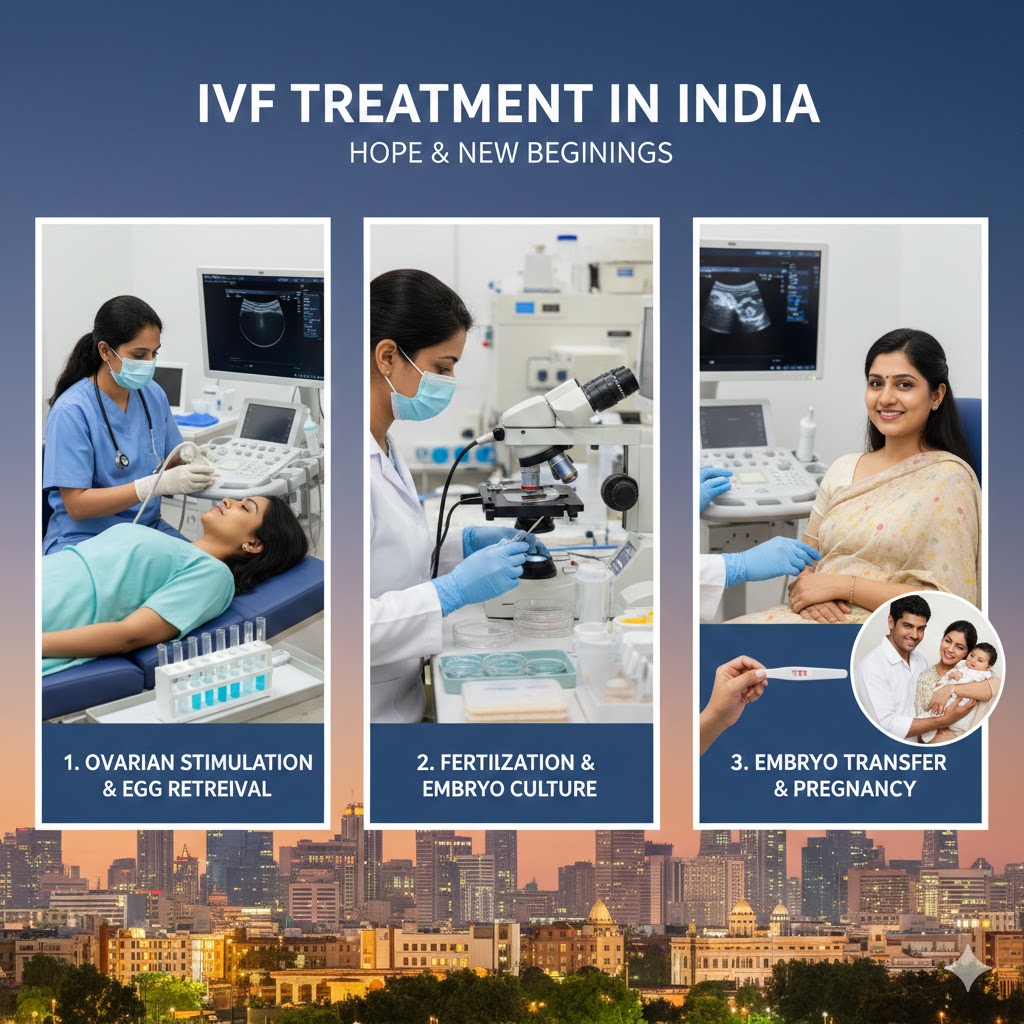
What is the procedure to perform the best IVF treatment in India? IVF treatment in India – IVF Cost In India is the estimated cost of the best IVF treatment in India is around INR 1.75,000 per cycle, And the price will increase as per the number of IVF cycles used. Also, the IVF treatment cost in India depends on the place the IVF procedure has taken place, age of the couples, cause of infertility, previous medical history, body weight, eating habits, etc. Couple’s initial consultation Oral Medication Fertility medication or hormonal injections IVF Cycle, where all the steps are included beginning from a woman’s monitoring until the embryo transfer – Physical Assessment Follicular Monitoring Ultrasounds (include vaginal ultrasounds) Blood work IVF Lab Charges Egg Retrieval step Fertilization Embryo transfer INR 1,75,000 – 2,00,000 Basic IVF Cost in India Delhi INR 1,75,000 – INR 2,00,000 Bangalore INR 1,60,000 – INR 2,20,000 Chennai INR 1,65,000 – INR 2,00,000 Hyderabad INR 1,60,000 – INR 2,30,000 Pune INR 1,75,000 – INR 2,00,000 Kolkata INR 1,60,000 – INR 2,10,000 Mumbai INR 1,70,000 – INR 2,20,000 The procedure to perform the best IVF treatment in India is when the fertility experts in We Care IVF Surrogacy will collect the eggs from the woman ovaries and mix them with the sperm of the genetic father or use donor sperm to ease the fertilization. Once the fertilization process is completed, an embryo is formed, and the embryologist will transfer that into the uterus of the genetic mother. The IVF treatment in India consists of 6 significant steps. These are: 1. Ovulation Induction: It is the first step of IVF treatment in India. The fertility expert will give women fertility drugs that control the timings of egg ripen and increase the chances of conception. The fertility expert will keep a check on the development of the egg using an ultrasound scan. A blood test will be done to check the hormone levels. 2. Egg retrieval: Once the ovaries are stimulated, the fertility expert will retrieve the eggs using a hollow needle through the pelvic cavity under local anesthesia to reduce the discomfort. While retrieving the eggs, painkillers suggested by the fertility expert can treat the same. 3. Sperm secured: The recipient’s husband needs to produce the sperm sample on the same day when the eggs are retrieved from the woman’s ovaries. If sperms are not available, the fertility experts in We Care IVF Surrogacy will extract them surgically. 4. Egg fertilization: It is a fourth and essential step of IVF treatment in India. The fertility experts will mix the eggs and the sperms and store them in a laboratory dish to ease the fertilization. The fertility experts then monitor the eggs to confirm that the fertilization has taken place and now the fertilized egg consider as an embryo. 5. Embryo transfer: On the day of the embryo transfer, the skilled embryologist will pick the healthy embryo/s to transfer into the woman’s uterus and wait for the pregnancy’s signs. 6. Pregnancy test: After 14 days of embryo transfer, the couple needs to visit We Care IVF Surrogacy for the pregnancy test conducted by the fertility expert using ultrasound to scan the woman’s ovaries. Once they see a sac and hear the infant’s heartbeat, that means pregnancy is confirmed, and the woman can be released from the fertility clinic to her local obstetrician for further treatment. What are the success rates of the best IVF treatment in India? The success rates of the best IVF treatment in India depend on the following factors. These are: 1. Couple’s age: The success rates of IVF treatment in India majorly depend on the couple’s age as IVF treatment is recommended to couples below 35. The study says that the ovarian reserve in a woman starts falling after the age of 35 years. It became difficult for them to conceive naturally and with IVF, too, because if there are no eggs or fewer eggs in ovaries, how will IVF treatment work? In such cases, the fertility expert will then suggests advanced IVF procedures to achieve the successful outcome of the fertility treatment. 2. Previous conception: The success rates depend on the previous concept of the woman and if it was with the same partner. Suppose a woman was previously pregnant with the same partner and undergoing IVF treatment in India with the same partner. In that case, the success rates are very high because a history of recurrent miscarriages or a conception with a different partner reduces the chances of successful IVF. 3. Lifestyle changes: People who consume more alcohol or tobacco have fewer chances of successful IVF treatment in India. Suppose the couple wishes to undergo IVF treatment in India. In that case, they have to quit smoking, drinking alcohol, etc., at least a month before IVF treatment to increase the chances of a successful pregnancy. 4. Obesity: It is also a significant factor that can impact the success rates of the concept because if the bodyweight of the couple is not according to their body mass index (BMI), then the couple needs a high dosage of fertility drugs that can impact the quality of eggs and sperms which decrease the chances of successful conception. So it is advisable to maintain ideal body weight as per body mass index. 5. Fertility issues: As per the research, the IVF success rates can get affected by male infertility issues. It is also essential to know that IVF success rates depend on ovulation. In a woman with a low ovarian reserve, the chances of a successful pregnancy are significantly less. The fertility experts in We Care IVF Surrogacy suggest IVF for couples below 35 years. If a woman takes ovulation stimulation drugs in a large quantity, it will decrease pregnancy chances, and success rates are highly impacted. If both males and females are dealing with infertility issues for a long time, it affects the chances of IVF treatment in India. As a medical advisor, we recommend couples, and if they cannot conceive within 12 months of

Fibroids Removal Surgery in India – Symptoms, Surgical ways to solve Fibroids
Fibroids are non-cancerous tumors that grow from the smooth muscle cells of the uterus. They are solid, not fluid-filled, and can vary greatly in size. Fibroids Removal Surgery in India is often recommended when these uterine fibroids cause pain, heavy bleeding, or fertility problems. Most fibroids are very small, but in some cases, they can grow as large as a volleyball and affect a woman’s health and fertility. All fibroids begin in the muscular wall of the uterus. The place where they grow decides the type of fibroid and the symptoms they may cause. In Fibroids Removal Surgery in India, doctors first identify whether fibroids are growing inside the uterus, within the uterine wall, or on the outer surface of the uterus. Uterine fibroids are growths found in or on a woman’s uterus and are usually harmless. However, as fibroids grow, they can change the shape of the uterus and may make it difficult for a woman to get pregnant. In such cases, Fibroids Removal Surgery in India can help improve symptoms and support fertility. Over time, the size, shape, location, and symptoms of fibroids may change. Fibroids are more common in women during their 30s and 40s and can continue until menopause. Many women have no symptoms, but some may experience severe pain, heavy bleeding, and other health issues. The exact cause of fibroids is still unknown, but hormones like estrogen and progesterone are believed to support their growth. After menopause, when hormone levels fall, fibroids often shrink or disappear, reducing the need for Fibroids Removal Surgery in India. Fibroids Removal Surgery in India Fibroids Removal Surgery in India is a safe and effective treatment option for women suffering from uterine fibroids. This surgery is advised when fibroids cause symptoms such as heavy menstrual bleeding, pelvic pain, pressure, or fertility problems. In India, advanced medical technology and experienced gynecologists help remove fibroids while protecting the uterus whenever possible. The type of surgery depends on the size, number, and location of the fibroids. With proper diagnosis and care, Fibroids Removal Surgery in India can improve health, relieve symptoms, and support better reproductive outcomes. Symptoms of Uterine Fibroids in Women – Any woman can get fibroids, anyway a couple of women are more plausible up-and-comers than others are. Fibroids most normally appear during the years where women produce estrogen and progesterone, so to speak, the conceptive years. Women, above the age of 35, may get some symptoms as a result of their fibroids, anyway a couple of women continue having issues fundamentally after menopause. Various women expect (and bank on) that their fibroids will disappear after their periods stop. They all things considered don’t, yet when in doubt quit creating, and after some time, over the long haul contract. Appearances from fibroids change extensively, from women who have no signs in any way shape or form, (the larger part); to women who feel the fibroid is controlling their life. Common issues in symptomatic women include: Heavy Menstrual bleeding Painful intercourse Pain and swollen abdomen Unable to get pregnant due to uterine fibroids Pelvic pressure And pregnancy problem Various women can feel their own fibroids just by laying their hand on their stomach. Various women are uninformed of weight reactions as a result of their dynamic start. Pain can result from degeneration of a huge fibroid in which a piece of the fibroid surpasses its blood supply and kicks the container. This is progressively customary during pregnancy when fibroids grow quickly. Generous menstrual depleting also causes torment. The uterus contracts (cramps) attempting to expel the coagulations realized by the significant passing on. Pregnancy Problems 33% of women with fibroids who become pregnant experiences basic improvement, particularly in the fundamental trimester. This is truly when various women recently become careful that they have fibroids. Infertility Fibroids can certainly influence on extravagance, particularly if their region obstructs the fallopian cylinder or keeps implantation from submucosal fibroids impinging on the uterine wretchedness. This problem is usually seen in those women who have delayed their pregnancy and in the age group of 35 above, this allows the fibroids to grow more and thus experiencing issue in pregnancy. How Are Fibroids Investigated? Fibroids are consistently dissected and found on pelvic appraisal, where the uterus feels greater than foreseen with hard round knocks felt rising up out of the surface. Ultrasound clear can tell where the fibroids are found and give an idea of their size. Sometimes they are perceived on laparoscopy (exploring the guts with a little telescope) or hysteroscopy. Treatments to solve Fibroid issues in women? Clinical technique is the standard treatment for fibroids that are causing desolation, overpowering or broad menstrual biting the dust, or various issues. There are various treatment decisions open depending upon the particular patient’s condition and age: Hysterectomy Myomectomy Hysteroscopic resection Laparoscopic clinical strategy Medication How is a Hysterectomy Performed? A hysterectomy is commonly performed through a cut in the paunch. A portion of the time the ovaries are removed despite the uterus and cervix. The decision to clear the ovaries depends upon the woman’s age and on whether the ovaries are wiped out. (The ovaries are subject for making hormones, for instance, estrogen. After menopause, in any case, the ovaries produce essentially less estrogen than they did already.) What are the Risks of a Hysterectomy? Like all errands, a hysterectomy has risks. These include: Malady requiring treatment with counter agents poisons (1 of each 5 women) Inside biting the dust (release) requiring a blood transfusion (1 of each 15) Injury to other pelvic organs, for instance, the bladder, entrails, or ureters (under 1 of each 100) end (1 out of 2,000). What Happens after a Hysterectomy? A woman generally speaking stays in the clinical center for two to five days after a stomach hysterectomy. Full recovery generally takes around about a month and a half. Women are usually urged to avoid driving and difficult work for two to about a month after clinical strategy. Light exercise may begin following

IVF Treatment in India: How it works & who should have it
IVF – just three alphabetical word but a life-changing method for those who have been trying to have a baby by their own but unable to make that happen. Yes, we have several issues in our lives, say that would be managing the family or accomplishing a family! Hope you have understood the topic which we are going to discuss right now, ye-sits IVF treatment and its process – how it works, what is the success rate and who can use this or who are right for this treatment. Let’s begin with the basic description of IVF Treatment in India. What is IVF Treatment? IVF, as mentioned above is one of the fertility treatment of assisted reproductive technology which has been so very famous across the world to deal with infertility issue. IVF is the treatment which can be performed in two ways – the first is using the conventional method/standard procedure and the second is using advanced procedure. What is actual there in the IVF Treatment in India, is to preparation of the healthy embryo or to create the embryo form the couple’s medical component – eggs and sperms. During the procedure, the couple is required to give own medical component to the fertility team of the centre, basically the female is much involved comparing to the male. Why so? This is because the female has to undergo few steps to provide her own eggs after all the embryo has to be transfer back into the uterus of the woman so yes she needs to come to the centre more often than the male for the process or steps. Once the embryo gets stick into the uterine lining of the woman, pregnancy likely is going to happen in a normal way. Who require the IVF Treatment in India? IVF is one of the most effective options for couples who are struggling to conceive. However, in some cases, pregnancy may be possible through simple treatments such as fertility medicines, hormonal injections, or IUI. This is why proper evaluation by a doctor is important. In IVF Treatment in India, specialists usually suggest trying basic methods first. If you are under 35 and have been trying to get pregnant for more than one year without success, IVF treatment may be needed to achieve pregnancy. Don’t decide yourself, it is better to have complete fertility investigation of you and your accomplice. Once the exact cause known, the next is designing well for the appropriate treatment. You can come in contact with our organization – We Care IVF Surrogacy for further investigation or say for an IVF Treatment in India. IVF Treatment is best suitable for Women having issue in menstruation cycle (delay of the menstruation cycle, heavy bleeding, irregular cycle) Premature ovarian failure Women with endometriosis PCOS issue Men with less sperm count, les motile Men who have been found as zero sperm count or very less (IVF-ICSI with Surgical Sperm Retrieval) Unexplained infertility issue Couples, who don’t want to pass genetic issue or chromosomal abnormality to their offspring can choose IVF treatment (IVF with PGD technique). IVF Treatment in India – How the Procedure Goes? (How it works) The total IVF Procedure may last from four to about a month and a half. Steps of IVF system in incorporates – Stage 1: Stimulation of the ovary Before beginning with the IVF Treatment, your fertility doctor is probably going to screen your ovaries and the planning of the egg discharge or you can say the specialist investigates the ovulation date of yours and analyze the treatment planning. The specialist is to ensure that your ovaries are delivering eggs, and your hormone levels are normal for the IVF treatment. Most ladies get fertility meds as of now to animate the ovaries to deliver at least one eggs. Having various eggs accessible for IVF will support the odds that the woman will get pregnant. Along these lines, the absolute first step of IVF treatment in India is that the female takes the prescribed fertility medication and hormonal injections for 10-14 days until the centre’s doctor stop her or when the specialist finds the eggs to be full matured to retrieve. These meds support the ovaries so as to invigorate numerous eggs. Various eggs increment the odds of effective treatment. Stage 2: Egg Retrieval Procedure In the meantime the female visits thrice or might be more (according to the specialist’s guidance) to the fertility clinic for ultrasounds exams and hormonal blood test. The doctor screens the oocytes growth or follicles development during the sittings and once the specialist gets secure with the development of the considerable number of eggs, the subsequent stage is the assortment of the eggs. During the egg-recovery step in the IVF Treatment, the local anesthesia or sedation is given to reduce any uneasiness. At that point a hollow needle is put into the upper vaginal divider. By the utilization of vaginal ultrasound, the egg are picked out from the follicles under delicate suction. Quickly after yearning of the follicle, the egg is separated from the follicular liquid. The egg is put in a culture dish or nutrient culture dish and afterward moved to the lab. Stage 3: Fertilization The following stage of the IVF Treatment comes as the preparation of the egg or the fertilization step, where the eggs and sperms are combined to create embryo. A sperm test gets made sure about, either from your accomplice or a donor. Some of the time when the sperm is found to be less motile, the doctor uses the procedure of ICSI, where a single sperm is directly infused into the egg. Once the sperms get into the cytoplasm of the egg, at that point, the sperm and egg are set in a fertility lab under the guidance of the experts to observe that. Stage 4: Embryo move and Implantation The final stage of IVF is embryo transfer, which is a very important step in deciding whether the treatment is successful. During this

IVF in Thailand – Relevant Information before planning for an IVF
IVF in Thailand: Infertility is defined as the inability to conceive. When a couple tries for a child but is unable to do so after several attempts, they may need solutions or medication to conceive. IVF – In Vitro Fertilization, also known as the test-tube baby program, is recommended for couples who have been trying to achieve pregnancy for a year but have not succeeded through natural means. IVF is the best method to have a child when traditional procedures fail. IVF in Thailand has become a preferred choice for couples, often working best alongside advanced procedures. IVF with other strategy, (for example, ICSI, IMSI, Surgical Sperm Retrieval, PICSI, and some more) is known as cutting edge IVF method. In the event that you have been prescribed to experience IVF, at that point the primary thing you ought to do is to look for the best IVF clinic Thailand. Try not to stress you are not the only one in this excursion, the group of We Care IVF Surrogacy is consistently there for you giving the best clinical consideration and direction at each progression of the treatment. Some vital aspects that need to be considered of IVF in Thailand IVF in Thailand requires three essential components: an egg, a sperm, and a uterus that can support the pregnancy. The success rate may significantly depend on various factors, including age, health conditions, and any genetic issues that may be present in the female. These factors are evaluated during treatment. If all conditions are favorable, the success rate of IVF treatment in Thailand, particularly with We Care IVF Surrogacy, is around 65-67%, a rate that is improving over time. The procedure that involve in IVF in Thailand You will initially be given a course of hormonal meds to help your ovaries to convey more (follicles contain eggs). These hormones are generally FSH analogs and they energize the ovaries to convey between 50-60 such follicles. The improvement of these follicles will be checked almost by testing for hormones and sequential ultrasound channels. On around the tenth day a fix of implanting – Trigger shot HCG is given which makes these follicles grow further. These follicles are then suctioned by a needle experienced the vagina and around 30 of these follicles will be suctioned at once. This step of IVF in Thailand takes around 20 min to complete this framework and in the midst of this time women will either be under sedation or general sedation. The initial step involves hormonal medications to help your ovaries produce more follicles containing eggs. These hormones are typically FSH analogs that stimulate the ovaries to produce between 50-60 follicles. The development of these follicles is monitored through hormonal testing and sequential ultrasound scans. Around the tenth day, a trigger shot of HCG is administered to help the follicles mature. This procedure takes about 20 minutes, during which the woman may be under sedation or general anesthesia. Once these follicles are suctioned, they are sent to the lab where they will be fertilized with the partner’s sperms. The eggs are cleaned of their incorporating cells and the best eggs for arrangement are picked. Then these eggs are kept together with the sperm given by the partner (on the day of egg-retrieval). The most motile and dynamic sperm penetrates into the wall of the egg for cell division. In circumstances where the sperm encounters issues going inside the egg’s wall, it tends to be explicitly imbued into the egg by a technique called Intracytoplasmic Sperm Injection. Once the eggs are dealt with the sperm successfully, they are kept under the observation of skilled specialist 3-5 days before being implanted in the female. When the specialist confirms the right time to place the embryo into the uterus, the next procedure of IVF in Thailand is embryo transfer. After the embryo is transferred into the uterus, the woman should return to the clinic for a pregnancy test within seven days. This test checks if the fertilized egg or embryo has implanted in the uterus. If the embryo successfully attaches to the endometrium, a normal pregnancy will soon follow. The Closing Lines We Care IVF Surrogacy is a leading IVF clinic known for its impressive success rates and comprehensive IVF treatment in Thailand. Providing reasonable IVF costs along with advanced facilities and services, We Care IVF Surrogacy Group has established itself as a preferred fertility agency worldwide. We wish you the best of luck in your journey to have your own child through IVF in Thailand. Feel free to contact our support team or if you want to fix an appointment with our senior fertility specialist, then you can call our administrators.

IVF Treatment in Kolkata – Let’s collect all the relevant information about IVF in Kolkata
At whatever point we tune in about fertility issues, what the first and viable treatment comes in our brain? IVF? Well Yes, IVF is the most functional procedure, which snares any issue of fertility in men and women. It is one of the most adequate courses of ART technique to eradicate of either male or female fertility issue. Kolkata is one of the spots, which gives unique IVF treatment all over India. Infertility, as we know, can’t be wiped out from its root yet it can manage utilizing other ART methods; one of the procedures we are going to gather is all about is In Vitro Fertilization, in short – IVF. There are five-six stage of IVF Treatment in Kolkata and is performed by We Care IVF Surrogacy crackerjack and skilled authority of fertility division. Infertility in India has gotten a regular issue subject these days; but no matter what the type of infertility issue a couple has, IVF (basic or advanced – as per the couple’s infertility case) is the ultimate solution compared to other treatments to decode the matter of barrenness. Infertility in a brief can be described as the incapability of attaining a parenthood. When the female or man not ready to accomplish the methodology of common cycle to being pregnant then IVF is a definitive answer for dispose of this issue. IVF treatment in Kolkata is extraordinary compared to other fertility medicines and is the most wanted course of methods accessible to decipher impotency issue. ART – Assisted Reproductive technology is the method to get rid of any issue identified with the fertility. IVF in Kolkata comes in top of the rundown to perform IVF course of medicine around the world. IVF in Kolkata is the best fertility treatment to explain a few issue identified with common pregnancy. Fertility issues for the past few year has been increasingly in females however these days the males are additionally affected from this issue similarly. IVF represents In Vitro Fertilization; this is, where sperms and eggs are gathered from the couple and afterward subsequent to accomplishing preparation, kept in the uterus of the female for conveying the pregnancy. This treatment is the process, which happens outside the human body rather than the female uterus. Let’s gather all the relevant information associated with the IVF Treatment in Kolkata. Brief Information about IVF Treatment in Kolkata IVF treatment in Kolkata isn’t that straightforward methodology to be performed however fertility specialists of the best IVF clinic in Kolkata give their 100% to make the whole process of IVF smooth and simple to perform in order to have a pleasant experience by the couple. Best IVF centers provided by the We Care IVF Surrogacy is the best center to have a soothing experience which fulfills every patient by giving the best fertility treatment and serving the advanced amenities throughout the process of an IVF in Kolkata. The underlying phase of IVF treatment in Kolkata is to give fertility medications and fertility related drug to the female so as to get numerous eggs at the hour of assortment of the eggs. During the step of fertilization, different eggs are required to have a decent success rate in treatment. By the method of blood hormonal tests and ultrasounds, the growth of the eggs are checked. When the development of the egg is affirmed, the step of egg-pickup process is started. With the assistance of an empty needle, (medical specialized), the eggs are pulled carefully; around the same time of egg recovery process, semen test assortment is finished. Presently, the egg and sperm are kept on the way of the culture dish so as to encourage normal fertilization. Dynamic and motile sperm penetrates with the egg and in this way insemination process is done. After the sperm has entered into the egg, soon fertilization – means cell division takes place. Setting the best embryo (a couple) into the female uterus is the last advance of IVF in Kolkata. In the event that the embryo is effectively embedded in the lining of the uterus, at that point the chance of pregnancy is nearly expected to be there. Inside a week or within ten days of moving the embryo, pregnancy test is done, where the female has to come to the centre for the test. Steps that are incorporated in the IVF Treatment Kolkata IVF in Kolkata is ordered into four simple ways. Bit by bit, the footsteps are given underneath 1) Starting of the fertility medicine This is the initial step of IVF process in Kolkata, here fertility medication and drugs endorsed by the fertility authority. These medications are provided so as to animate the ovaries of the woman to produce multiple eggs instead of a single. This is the process, which is mandatory during the IVF treatment in Kolkata. Fertility medication and hormonal injections need to take by the female for ten to twelve days under the assistance of the fertility expert. 2) Retrieval of the eggs and collection of the semen sample Female needs to visit center consistently for the check-up; when the specialist affirm about the development of the eggs by performing the blood hormonal test and transvaginal ultrasounds, then there the injection known as – trigger shot, is given toward the end period of retrieval of eggs. This trigger shot infusion is given to make all the eggs developed appropriately. Inside 24-34 hours of this infusion, method of egg collection is arranged by the fertility team. With the assistance of an empty needle, eggs are recovered by the team of fertility specialists. Around the same time, semen is gathered from the male accomplice by normal ejaculation. 3) Fertilization Fertilization is one of the significant phases of IVF in Kolkata. So now once after gathering the eggs and sperms from the intended couple, the eggs and sperms are kept on the nutrient culture dish in order to accomplish the fertilization procedure. Fertilization rate depends upon the quality of the eggs and sperm motility.